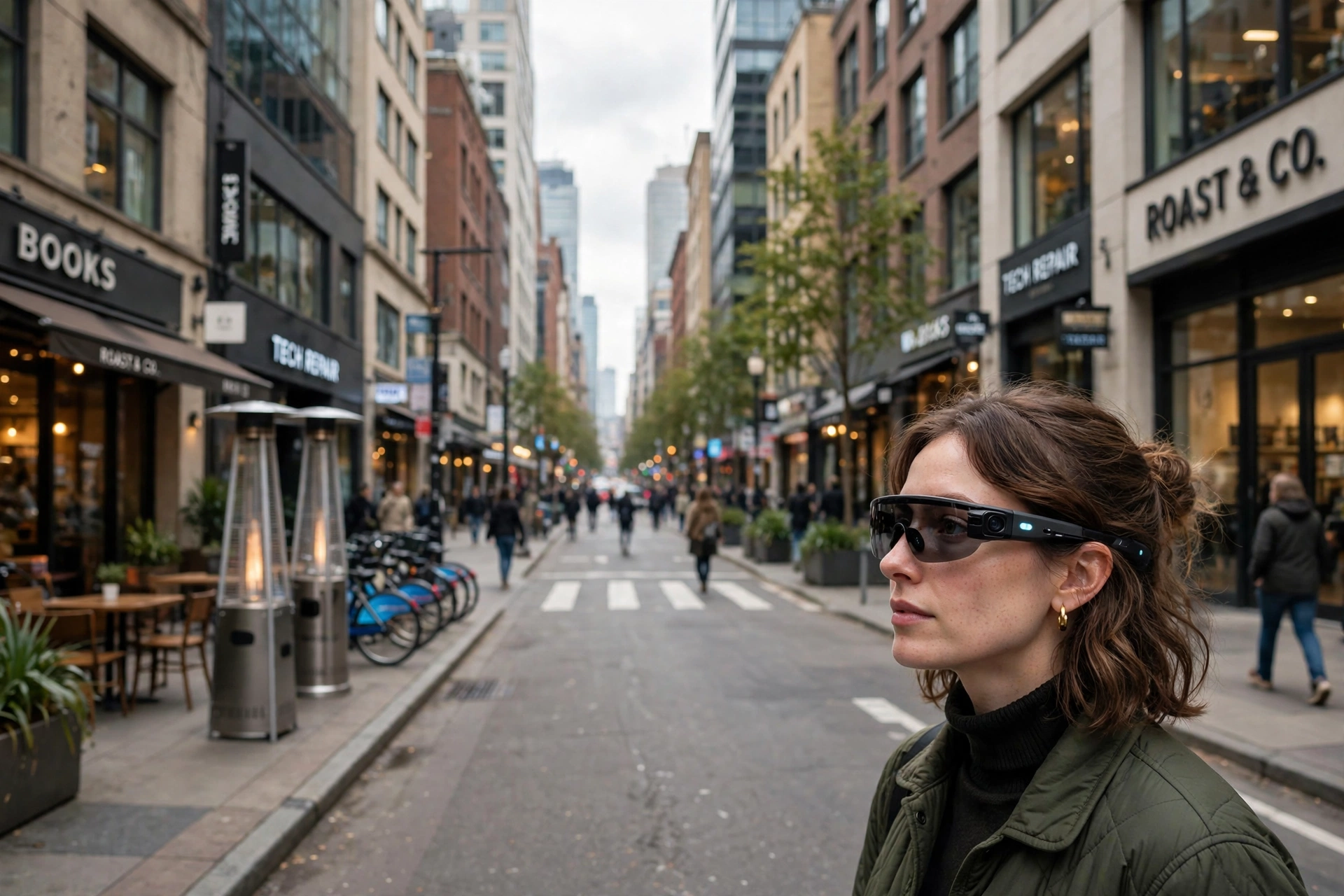
Smart glasses have been “about to change everything” for more than a decade — and have repeatedly failed to do so. This year, however, something has shifted. AI-powered glasses that can answer questions about what you are looking at, translate signs in real time and take calls without a phone in hand are selling in meaningful numbers, and the technology press has begun treating them as a genuine product category rather than a gimmick.
The change is not the hardware alone, impressive as the miniaturisation is. It is the arrival of capable AI assistants that make hands-free computing actually useful. Asking your glasses “what am I looking at?” or “remind me where I parked” and getting a fast, accurate answer turns a novelty into a tool. More technology coverage appears in our news section.
What Today’s Glasses Can Do
Current models focus on audio and camera rather than displays. Typical features include open-ear speakers, voice-controlled assistants, photo and short-video capture, live translation, and turn-by-turn directions spoken into your ear. Some newer versions add a small display in one lens for captions, notifications and prompts.
For people with visual impairments, the impact can be profound: glasses that read menus aloud, describe rooms and identify products are moving from research labs into shops. Delivery riders, warehouse staff and field technicians are also early adopters, using hands-free checklists and remote expert guidance. Technology coverage from The Verge has chronicled how quickly the category’s ambitions have grown.
Privacy Is the Hard Problem
A camera on your face pointed at everyone else remains socially awkward — and regulators know it. Manufacturers have added recording lights and sounds, but bystanders cannot opt out of being filmed, and always-listening assistants raise questions about consent and data retention.
Privacy groups argue that clear rules are needed before the devices become ubiquitous: visible recording indicators that cannot be disabled, strict limits on facial recognition, and transparency about what audio and images leave the device. Some venues — cinemas, gyms, schools — have already restricted them. Lawmakers in several jurisdictions are examining whether existing surveillance law covers wearable cameras adequately, a debate tracked by digital-rights organisations and reported by outlets such as WIRED.
Phones Are Not Disappearing Yet
For all the momentum, smart glasses remain companions to the smartphone rather than replacements. Battery life is measured in hours of active use, displays are rudimentary, and prescription wearers face extra cost and complexity. Prices, while falling, still place capable models firmly in premium territory.
Analysts expect the category to grow steadily rather than explode: each generation adds capability, trims weight and lowers price, while the AI assistants inside them improve month by month.
The View Ahead
The original promise of smart glasses — information layered onto the world, hands free — is finally being delivered in a form people will actually wear: ordinary-looking frames with extraordinary software inside. Whether society sets sensible boundaries quickly enough will decide how welcome they are.
One thing is certain: after years of false starts, the age of AI eyewear has genuinely begun. The question is no longer whether the technology works, but how we choose to live with it.