

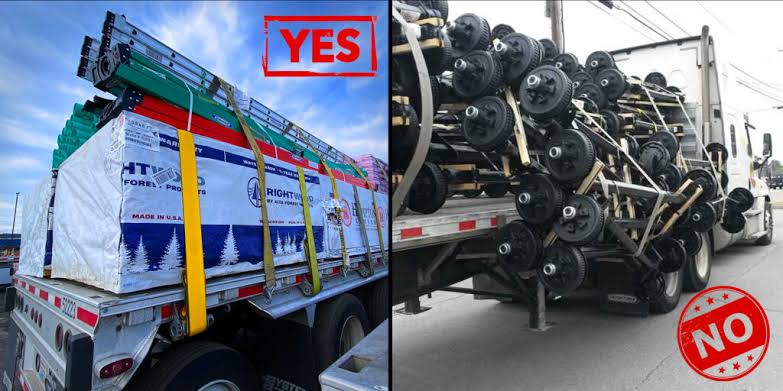
Most drivers have seen flatbed trucks loaded with cargo rolling down the road. Most drivers have also noticed that some truckers load cargo in an unusual way, such as placing it all in the front or middle of the trailer. Essential skills of a flatbed truck driver include ensuring cargo is loaded so the weight is evenly distributed and secured on the trailer.
An experienced personal injury lawyer like the attorneys at GDH Law will tell you that securing a flatbed load is one of their most important responsibilities, because a poorly secured load can slide or shift, throwing the trailer out of balance and creating an accident risk. An improperly secured load can also fall off the trailer, immediately creating a road hazard. The quality of load securement is directly related to the risk of serious crashes and injuries or fatalities.
The Science of Securing Flatbed Loads
There are an estimated 1.1 million flatbed truck drivers responsible for ensuring their cargo is properly loaded. Cargo is often loaded by warehouse employees, crane operators and forklift operators. The truck driver ensures the load’s weight is evenly distributed and the load is secured.
There are many cargo types, and each presents unique requirements for ensuring cargo safety. Typically, problems are caused by cargo that is not evenly distributed on the trailer, is heavy and overloads the trailer weight, is irregularly shaped or is oversized.
There are many considerations when loading cargo. For example, oddly shaped heavy construction equipment has a high center of gravity and is challenging to secure in a way that anticipates all road shapes and conditions. Besides the center of gravity, flatbed truck drivers have many things to consider when securing their loads. They include trailer axle weight, appropriate tie-downs for the particular cargo, tie-down tension and whether the load needs to be covered so it is protected from weather.
Adding to the risks of improperly secured flatbed loads are a poorly maintained truck or trailer, or worn equipment, such as frayed cargo straps. Corroded metal arms or stakes on flatbed trucks can break under the immense weight of logs or pipes, placing stress on the joints. They may also weaken and lean, allowing the load to shift.
The weight of the cargo is not enough to keep a load in place. The load is subjected to various forces due to truck acceleration, slow or sudden braking, turning and maneuvering curves in the road or on ramps and poor road conditions that create vibration or bouncing. During acceleration, the pressure on the cargo pushes it towards the trailer’s rear. When a truck driver brakes suddenly, the pressure on the load causes it to move forward.
Lateral force is a sideways force that occurs when turning, driving on a curve or changing lanes. Weather can also create lateral force, such as a strong wind hitting the side of cargo, especially when the load is high.
When these forces are at play, cargo can shift, changing the center of gravity. This affects how the truck handles. It can lead to trailer sway, in which the truck whips back and forth, a trailer rollover or total loss of truck control.
Cargo can fall off the trailer onto the road when it is not properly secured. This means the weight on the trailer changes and the remaining cargo may shift. This is one of the most serious risks of an improperly secured flatbed load. It can happen quickly. The item may fall off the back or side, forcing vehicles to swerve, lose control or brake suddenly, setting up the risk of a serious accident. If the cargo item falling off the trailer is heavy and solid, such as steel beams, an accident can easily result in a fatality.
Besides loading the trailer correctly, choosing the right securement is just as important. Typical equipment includes cables, webbing straps and chains. Winches and load binders are used to ensure cables, straps and chains are tightened correctly. These items should be closely inspected before use and during long hauls. Straps, in particular, can be damaged when they rub against the trailer or cargo.
However, straps and chains alone are not always enough. Depending on the type of load, the truck driver may need to block or brace cargo to minimize potential shifting. Also, if a load consists of semi-loose materials like sod, stacked bricks and construction debris, a heavy-duty tarp can help prevent shifting and prevent loose material like sand or dirt from blowing into vehicles and creating a distraction.
Accident Risks Created
The risks associated with poorly secured flatbed truckloads are real. Shifting or falling cargo can cause serious accidents, some of which are catastrophic. Falling equipment, lumber or other cargo can strike a vehicle sharing the road. A trailer whipping back and forth when a load shifts may lead other drivers to make sudden lane shifts. When the center of gravity shifts on a trailer, a truck may tip over on a curve, ramp or when the tires inadvertently go off the road on one side.
Sudden shifting of load weight can also cause the truck and trailer to jackknife. Uneven loads not properly secured increase stopping distances due to strain placed on tires and brakes. There are also cases in which smaller passenger vehicles have slid beneath a flatbed trailer while trying to avoid falling cargo.
These are not low risks. The federal government reports that approximately 10-12% of all truck accidents causing injuries or death each year involve flatbed trucks. Common injuries include fractures, spinal cord injuries, organ damage, traumatic brain injuries, lacerations, burns and amputations.
Tools for Securing Cargo
Federal and state laws require specific safety steps for securing flatbed cargo. Flagrant violations that lead to injuries or fatalities make it easier to assign responsibility, but most of the time it is not that simple. A truck accident lawyer considers all potential responsible parties that may have contributed to the accident. It could be the truck driver, the company loading the flatbed truck, the trucking company that did not ensure the driver was knowledgeable in cargo loading safety rules or even the flatbed trailer manufacturer if a securement is defective.
The complexity of these cases is why some attorneys specialize in truck crashes. Accidents can happen in unexpected ways, but many accidents involving flatbed trailers could be prevented by better load securing. Accidents can and often do lead to serious physical, mental and financial harm or death. A passenger vehicle is no match for a heavy-duty truck and flatbed trailer.

