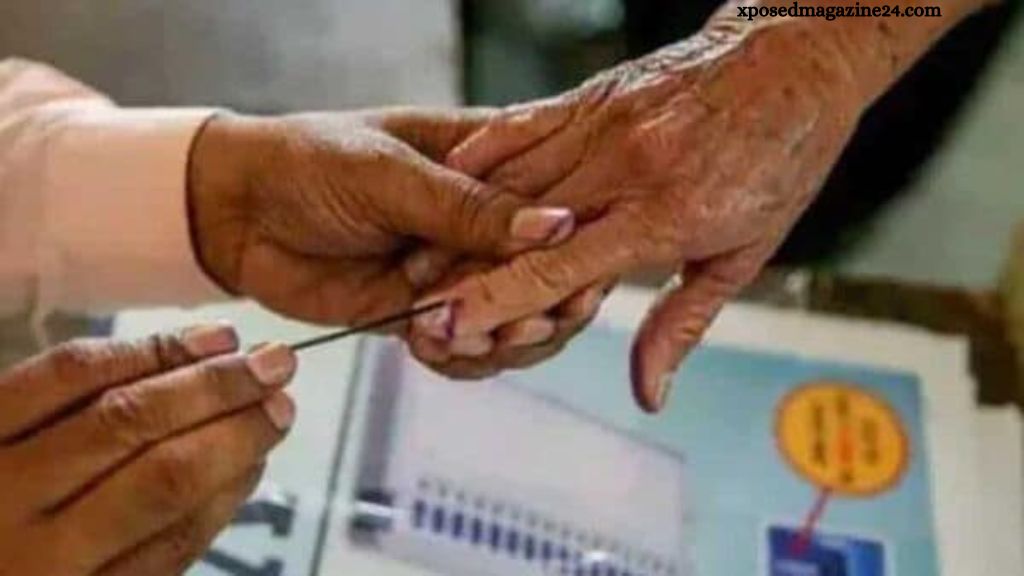
With Karnataka’s assembly elections approaching, the Election Commission has launched a Vote-from-Home (VFH) option for individuals over 80 years old and those with disabilities.
Chief Election Commissioner Rajiv Kumar announced, “For the first time, ECI is offering this facility to voters above 80. Our teams will visit them with Form-12D for voting.” He emphasized that while the EC encourages elderly voters to visit polling stations, those unable to do so can utilize this service.
Kumar assured that voter secrecy would be maintained, and the process would be documented via video. “Political parties will be notified whenever VFH is implemented,” he added.
A mobile app, ‘Saksham,’ has been introduced for people with disabilities to register and vote. Additionally, the ‘Suvidha’ portal allows candidates to submit nominations and affidavits and request permissions for rallies.
The ECI also launched the Know Your Candidate (KYC) campaign to inform voters about candidates, especially those with criminal backgrounds. Political parties must justify their selection of such candidates on their official platforms.
Lastly, the ECI has introduced the e-VIGIL app, which enables voters to report election code violations and guarantees a response time of 100 minutes. The app captures the GIS location for precise action.
Read More: Lok Sabha Elections 2024: Dates, Phases, Key Players, and Essential Information
Voter count in Karnataka
Kumar also highlighted that Karnataka has 12.15 lakh voters over the age of 80 and 5.55 lakh people with disabilities (PWD). Regarding the Karnataka assembly elections, he mentioned that the state, with 224 constituencies, has 36 seats reserved for SCs and 15 for STs. The total voter count stands at 5.21 crore, including 2.59 crore women voters. This figure also includes 16,976 centenarians, 4,699 third-gender voters, and 9.17 lakh first-time voters.
Polling stations in Karnataka
Karnataka has 58,272 polling stations, including 24,063 in urban areas, with an average of 883 voters per station. Of these, 1,320 are women-managed, 224 youth-managed, and 224 PWD-managed. Webcasting will be implemented in 29,141 polling stations, with 1,200 designated as critical.
Since most polling stations are in schools, they will feature permanent facilities such as water, electricity, toilets, and ramps. “These improvements are a gift from the ECI to schools and students,” Kumar remarked during his three-day visit to review election preparations.
Kumar stated that the election must occur before May 24, when the current assembly’s term ends. He urged officials to ensure a fair and transparent process.
Addressing concerns about fake narratives and inducements, Kumar acknowledged these as significant challenges. In the election phases, he explained that the Commission’s decision would depend on factors like force availability, exams, and festivals. He also warned against any officer bias, promising strict action.
Additionally, banks have been instructed to monitor transactions to prevent the misuse of money power during the elections.
Frequently Asked Questions
What is the ‘Vote From Home’ (VFH) facility?
The Election Commission (EC) has introduced the ‘Vote From Home’ facility for voters over 80 and people with disabilities (PWD), allowing them to cast their votes without visiting polling stations.
Who is eligible for the ‘Vote From Home’ facility?
The VFH facility is available to voters over 80 and those with physical disabilities who cannot visit polling stations.
How will the VFH process work?
Election teams will visit eligible voters at their homes with a Form-12D to facilitate voting. The process will be documented to ensure secrecy, with video recordings of the proceedings.
Can elderly voters still visit polling stations?
The EC encourages elderly voters to visit polling stations if possible. However, the VFH option is available for those who cannot.
How will voter secrecy be maintained during ‘Vote From Home’?
The voting process will be conducted under strict supervision, and it will be videographed to maintain transparency and voter secrecy.
What mobile apps have been introduced for disabled voters?
A mobile app called ‘Saksham’ has been introduced for PWD voters, enabling them to log in and cast their votes digitally.
What other digital initiatives are available for candidates and voters?
The EC has launched the ‘Suvidha’ portal, which allows candidates to file nominations and affidavits and seek permissions for rallies. There is also the ‘Know Your Candidate’ (KYC) campaign, which helps voters make informed choices.
What is the e-VIGIL app?
The e-VIGIL app allows voters to report election code violations. Complaints can be logged, and responses will be provided within 100 minutes.
When will the Karnataka elections be held?
The election must take place before May 24, the end of the current state assembly’s term. The Election Commission will decide the exact date.
How many polling stations will be set up in Karnataka?
Karnataka will have 58,272 polling stations, including 24,063 in urban areas. These stations will have special facilities such as ramps, toilets, and accessible amenities for voters.
Conclusion
Election Commission’s introduction of the ‘Vote From Home’ facility for voters over 80 and those with disabilities marks a significant step in making the Karnataka elections more accessible and inclusive. By implementing various digital tools like the Saksham and Suvidha apps and taking measures to ensure transparency and fairness, the EC is enhancing the voting experience for all citizens.
Additionally, the focus on maintaining election integrity through initiatives like the e-VIGIL app and steps to prevent the misuse of money power demonstrates a commitment to conducting a fair and transparent election. As the state prepares for the polls, these initiatives aim to ensure that every eligible voter can participate in the democratic process without barriers.