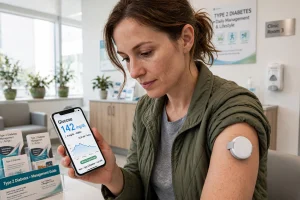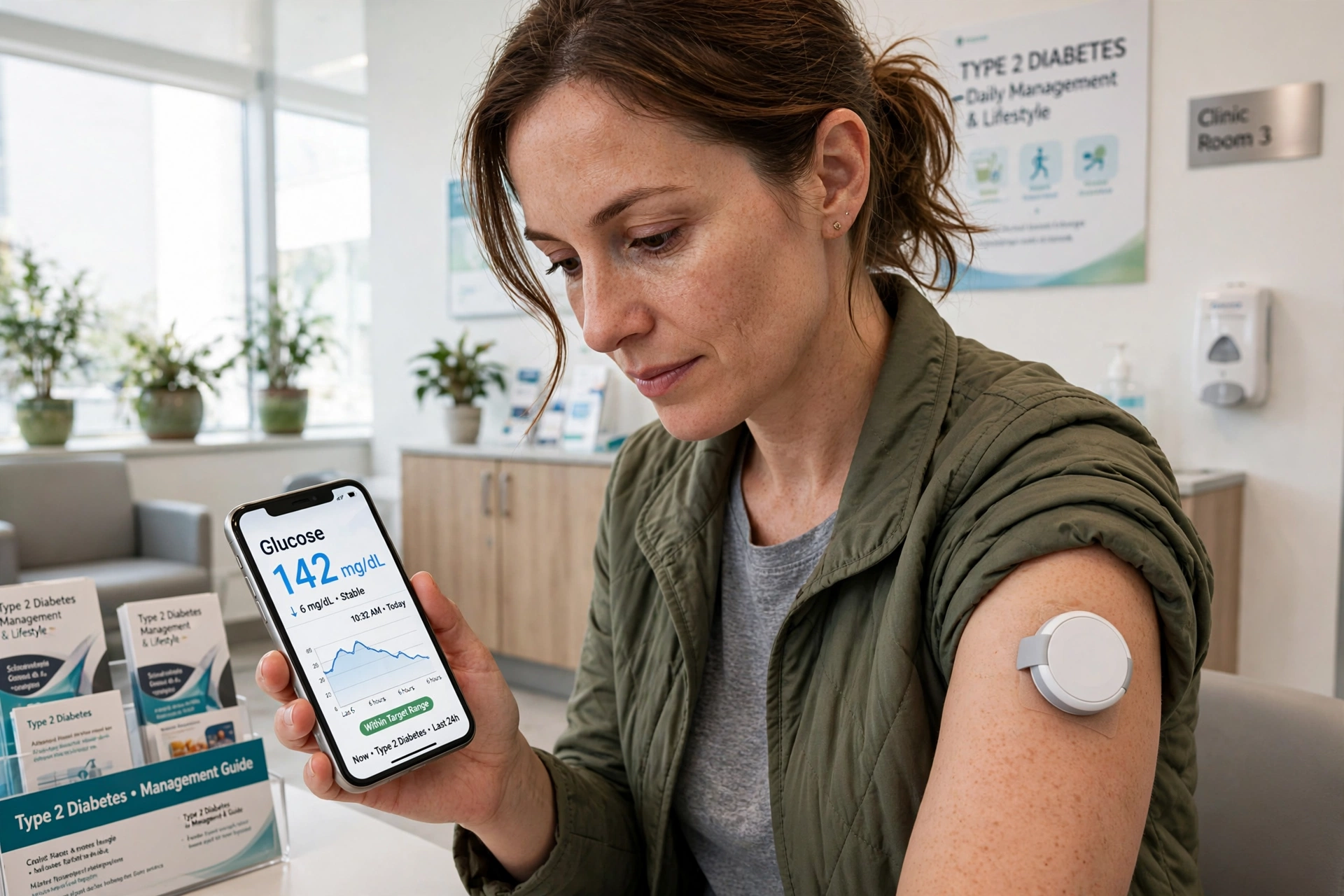
Continuous glucose monitors have transformed care for people who use insulin, but a much larger group — adults with type 2 diabetes who do not use insulin — has usually been left with finger-prick tests and guesswork. The largest clinical trial of its kind, published in the New England Journal of Medicine, now suggests that may need to change: patients using the wearable sensors spent approximately five more hours a day in their target blood sugar range.
What the Trial Found
Continuous glucose monitors, or CGMs, are small sensors worn on the arm or abdomen that measure glucose in the fluid under the skin every few minutes and send the readings to a phone or receiver. Instead of a handful of snapshots a day, patients and clinicians get a complete film: overnight lows, post-meal spikes, and the effect of a walk, a stressful meeting or a poor night’s sleep, all visible in near real time.
According to the summary reported by the University of Colorado Anschutz Medical Campus, the improvement of roughly five extra hours a day in range is clinically meaningful. Time in range is increasingly treated as a key measure alongside HbA1c, because it captures the swings that a three-month average hides — and it is those swings, researchers believe, that drive many long-term complications.
Why Five Hours Matters
Blood sugar that spends more time in range means less time at the damaging extremes. Sustained high glucose contributes to nerve damage, kidney disease, vision loss and cardiovascular problems, which remain the most serious consequences of type 2 diabetes. If a relatively simple wearable can shift daily patterns by five hours without insulin, it gives patients a tool that works through feedback and behaviour rather than additional medication: people see immediately what a meal does, and adjust the next one.
That feedback loop is the same principle behind much of modern consumer health technology. As we noted in our explainer on understanding app permissions, the value of health apps depends on users knowing what data is collected and how it is used — a question that matters just as much for glucose data shared with clinics and insurers.
Who Should Use a Monitor Now?
The trial will strengthen the case for wider insurance coverage, which has historically limited CGMs largely to insulin users. Guidelines from organisations such as the American Diabetes Association have been steadily broadening, and evidence from a large, rigorous trial in non-insulin users is exactly what payers usually demand before expanding reimbursement.
There are caveats. Sensors cost money, need replacing every 10 to 14 days, and generate a stream of data that can overwhelm patients without proper support. Not everyone wants to be confronted with a glucose graph after every meal, and clinicians warn that the technology works best when paired with education — a short session on what the arrows and trends mean can matter as much as the device itself. Skin irritation and alarm fatigue are also real, if manageable, issues.
A Shift Towards Data-Led Diabetes Care
The broader direction of travel is clear. Diabetes care is moving from occasional lab tests towards continuous, personalised feedback, in the same way that other once-specialist technology has become everyday — a trend we explored in AI smart glasses moving from novelty to everyday tech. For the millions of adults managing type 2 diabetes without insulin, this trial offers something concrete: not a cure, but five more hours a day on target, and the information to understand why.
Experts also stress that the findings do not replace medication, diet or activity, but strengthen them. When patients can see, hour by hour, how a short walk after dinner flattens a glucose rise, advice that once sounded abstract becomes personal and repeatable, and that daily reinforcement is difficult to achieve with quarterly blood tests alone in routine primary care.
Patients interested in trying a monitor should raise it at their next appointment, particularly if their HbA1c remains above target despite medication. As the evidence base grows and prices fall, the small white disc on the arm may become as familiar a sight in type 2 care as it already is in type 1.