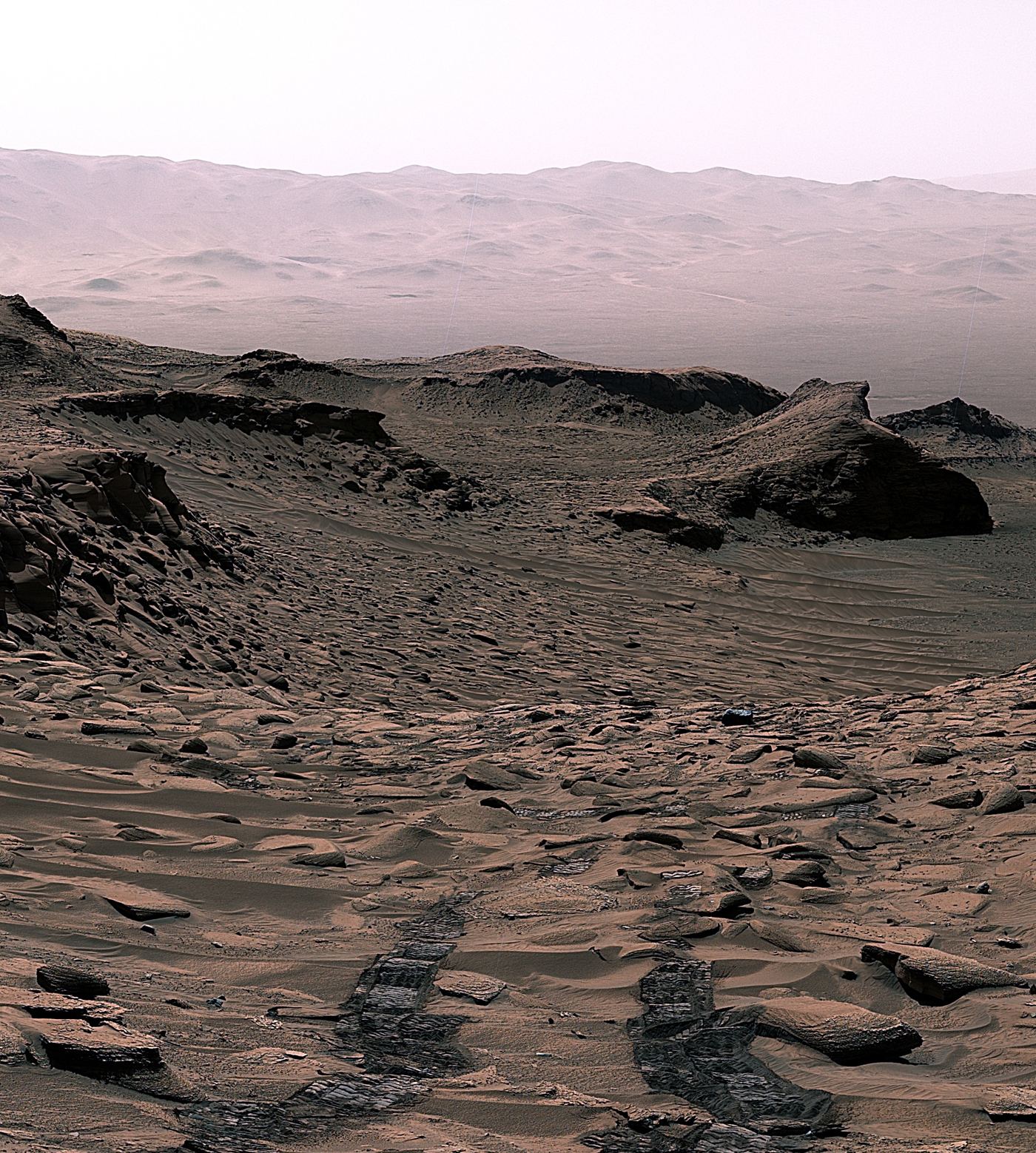
A Mars rover has found fresh evidence that rivers once flowed across the planet’s surface, in the form of layered sediments and rounded pebbles that could only have been shaped by moving water. The rover’s cameras photographed exposed rock layers that tilt and curve in the way river deposits do on Earth, while its instruments detected minerals that form in the presence of liquid water. Scientists say the site was once a river system feeding into an ancient lake, and that the sediments may preserve traces of the environment in which they formed. The discovery adds to a growing body of evidence that early Mars was far warmer and wetter than the cold desert seen today, with rain, rivers and standing water persisting for long periods. For planetary scientists, each such finding narrows the question of whether Mars could once have supported microbial life.
What the Evidence Shows
Dating the river deposits is the next step, and researchers are combining rover measurements with orbital images to map how far the ancient channels extended. The rover is also collecting rock samples that a future mission hopes to bring back to Earth, where laboratories could search them for chemical signs of past life with far greater sensitivity than instruments on Mars. The biggest puzzle remains what happened to the water: some escaped to space as the atmosphere thinned, some froze into the polar caps and underground ice, and some may still sit locked in minerals beneath the surface. Mission planners say the river evidence strengthens the case for sending future rovers to similar sites, where the chances of finding preserved traces of ancient habitability are highest. Engineers add that the rover findings will guide where future missions land, since sites with clear river evidence offer the best chance of finding preserved signs of ancient water. Reporting and analysis from sources such as National Science Foundation track the same developments, and specialists following the ancient Martian river channels say the direction is now consistent across independent lines of evidence.
The Wider Context
The wider context is a research landscape in which replication and open data now decide reputations. Findings connected to the ancient Martian river channels are being checked by independent groups with shared datasets, and the teams involved publish their methods in full so rivals can test every step. That discipline is slower than a headline cycle, but it is why results in this area increasingly survive first contact with scrutiny.
What Happens Next
What happens next in the story of the ancient Martian river channels will be decided by follow-up work already under way: larger samples, longer observation and instruments that have not yet come online. The researchers involved are unusually united on one point, that the current results justify the next investment of time and money. Readers will not have to wait long for the first tests of that claim. You can follow related developments in our coverage of science.
There is a practical lesson in all of this for readers deciding what to do today. Start with the verified facts, be wary of anyone promising certainty, and prefer reversible steps while the evidence is still developing. Circumstances differ by country, income and personal situation, so general guidance should always be weighed against your own context before you act on it in any significant or lasting way.