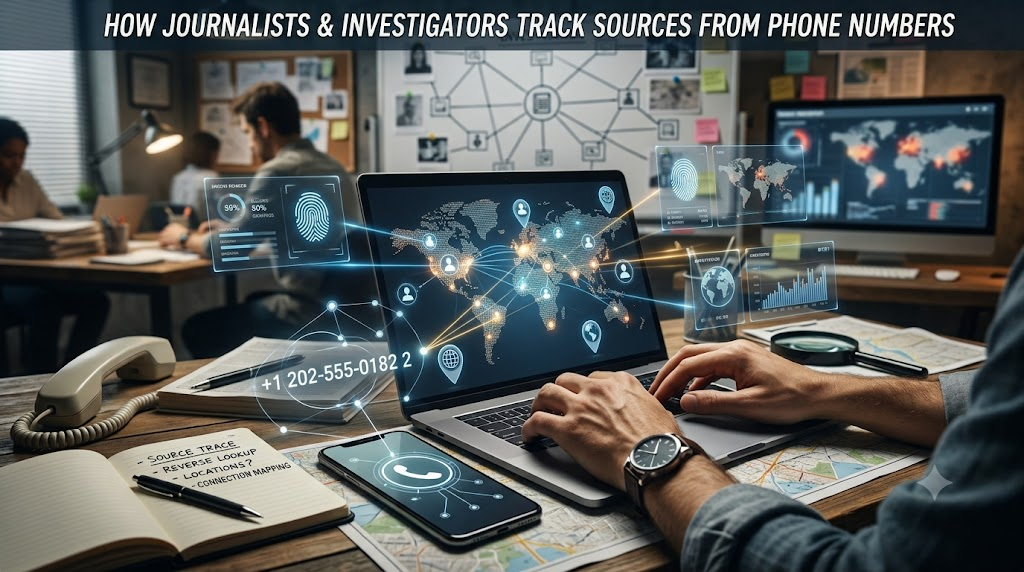
Every major investigation starts somewhere. Sometimes it’s a leaked document, a tip from a whistleblower, or a name overheard in the wrong room. But increasingly, modern journalists and private investigators are finding that the most powerful starting point is deceptively simple: a phone number.
A string of ten digits might seem like the least revealing piece of information imaginable. But in the hands of a skilled investigator or a determined journalist, that same number can unravel an entire network of identities, locations, and connections. Understanding how this works – and why it matters – is essential for anyone who wants to understand the mechanics of modern investigative reporting.
The Phone Number as a Digital Fingerprint
When people think about tracking someone down, they often imagine hacking, surveillance vans, or elaborate sting operations. The reality is far more mundane and far more accessible. A phone number is essentially a digital fingerprint that people leave behind everywhere they go online.
People register on websites using phone numbers. They post them on social media profiles, business listings, classified ad platforms, and community forums. Every time that number surfaces in a public-facing database, it creates a data point that a trained investigator can cross-reference and verify.
The key skill isn’t technical wizardry. It’s patience and methodology. Investigators are taught to treat a phone number the same way an archaeologist treats a shard of pottery – it’s not the whole picture, but it tells you where to dig next.
Step One: Reverse Lookup and Basic Identification
The first thing any investigator or journalist does with an unknown number is run it through a reverse phone lookup. This process attempts to match the number against public and semi-public databases to surface the registered owner’s name, carrier information, and sometimes a general location.
This is where tools like a phone-based address and contact finder become genuinely useful. Rather than manually combing through multiple databases, these tools aggregate data from dozens of sources and return consolidated contact details, names, and addresses tied to a specific number. For journalists working against a deadline or investigators managing multiple leads simultaneously, this kind of efficiency is not a luxury – it’s a necessity.
That said, experienced investigators never stop at a single lookup result. The name that surfaces in a database might be outdated, belong to a previous owner of the number, or be listed under a variation that doesn’t immediately match other records. The reverse lookup is always a starting point, never a conclusion.
Step Two: Cross-Referencing Across Open Source Platforms
Once an investigator has a name or partial identity attached to a phone number, the next phase involves cross-referencing that information across open source platforms. This is commonly referred to as OSINT – Open Source Intelligence – and it has become a cornerstone of modern investigative journalism.
Search the name against social media platforms. Look for the number itself on Facebook Marketplace listings, Craigslist posts, business directories like LinkedIn, and regional Yellow Pages alternatives. Each platform where the number appears adds another layer of verified identity and context.
Investigators also pay close attention to the metadata around these appearances. When was the listing posted? What was being sold or advertised? Does the language of the post match the demographic profile that’s beginning to emerge? These seemingly minor details help build a credible, verifiable picture of who this person actually is.
Step Three: Location Mapping and Address Verification
Narrowing down a physical location from a phone number requires layering multiple data points. Area codes provide a rough geographic region, but numbers are easily ported across states and countries, which means area code alone is a weak indicator.
More reliable signals come from the addresses that appear in public records linked to the name – property tax records, voter registration rolls, business filings, and court documents. In jurisdictions where these records are publicly accessible, investigators can often confirm or narrow down a current address with surprising precision.
The process is methodical and time-consuming, which is exactly why many professional investigators combine manual research with automated lookup tools to handle the initial data gathering before moving into the more nuanced analytical phase.
Why Journalists Are Getting Better at This
The shift toward data-driven investigative journalism has accelerated dramatically over the last decade. Newsrooms that once relied almost entirely on in-person sources and document leaks are now training reporters in digital forensics, public records research, and OSINT methodology.
Part of this shift is practical – it’s simply faster and cheaper to verify a source digitally before committing resources to an in-person investigation. But part of it reflects a deeper change in where news actually lives. Public records, social media archives, and business databases contain extraordinary amounts of verifiable information that most reporters previously had no idea how to access.
For freelancers and independent journalists, building these skills has become a genuine competitive advantage. Knowing how to trace a source, verify a claim, and map connections from a single data point means you can deliver stories that others simply can’t. If you’re thinking about how to position these skills commercially – whether for journalism, consulting, or other independent work – it’s worth exploring structured approaches to outreach and client development through resources like this B2B lead generation and email outreach guide.
Ethical Boundaries and Legal Considerations
It would be irresponsible to discuss these investigative techniques without addressing the ethical and legal framework that should govern their use. The ability to find someone from a phone number does not grant the right to harass, surveil, or expose private individuals without legitimate public interest justification.
Responsible journalists adhere to a clear standard: the investigation must serve the public interest, the methods used must be proportionate to that interest, and subjects must be given the opportunity to respond before publication wherever possible. Investigators operating in legal or corporate contexts are bound by similar principles, including data protection laws that vary significantly by country and jurisdiction.
Using these tools to locate a source for a public interest story is categorically different from using them to track down a private individual for personal reasons. That distinction matters enormously, and professional investigators and journalists take it seriously.
The Bigger Picture
Phone numbers are not going away as investigative entry points. If anything, they are becoming more useful as more of daily life moves through mobile-first platforms. The investigators and journalists who understand how to extract maximum signal from minimal starting information will continue to have a significant edge in uncovering the stories that matter most.
Whether you’re a seasoned reporter, a private investigator, or someone just beginning to explore the field of open source research, the core skill is the same: learn to see a phone number not as a dead end, but as a door.