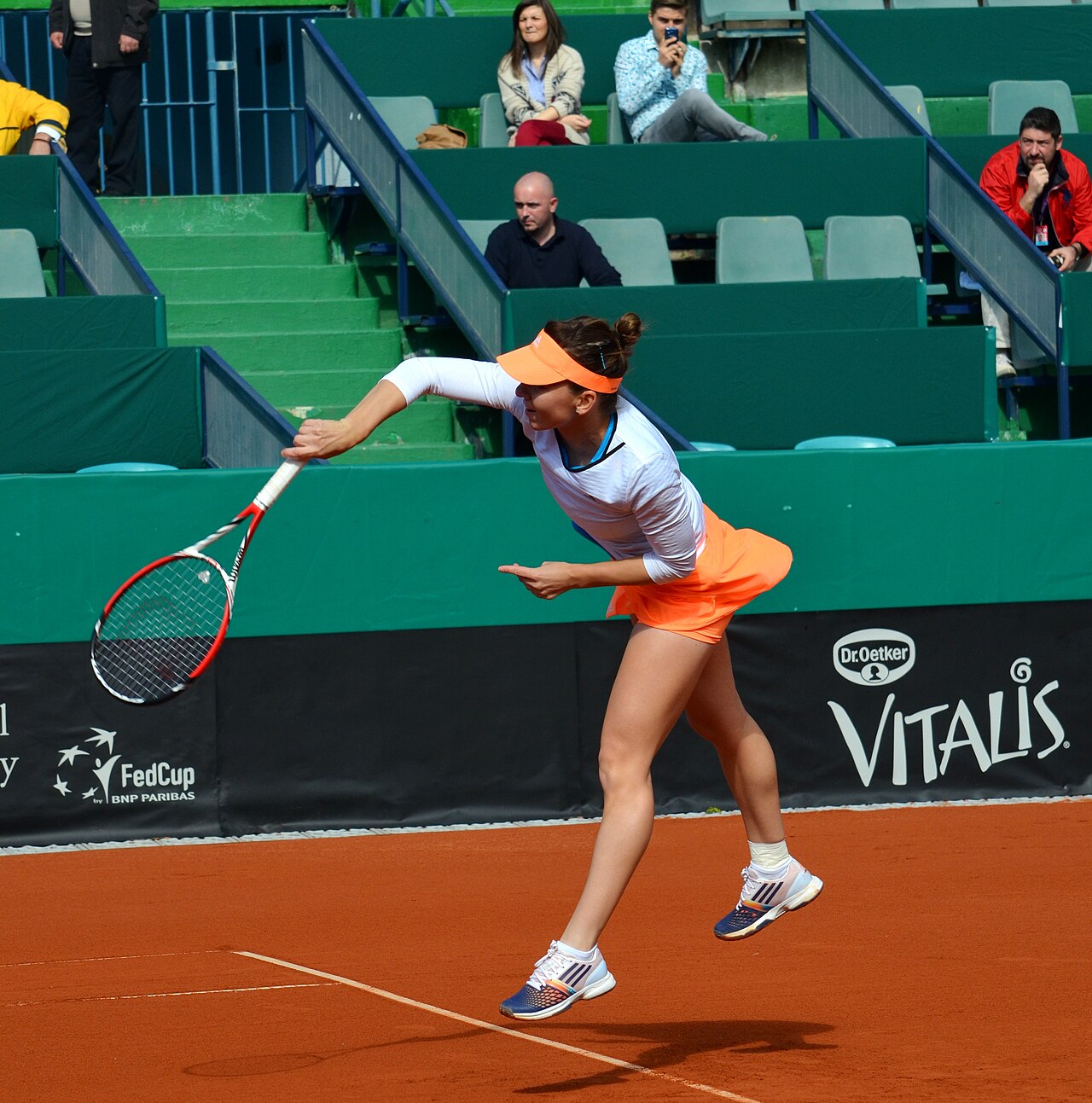
Every tennis season produces a name that starts appearing everywhere at once, and right now one of them is Talia Gibson. The Australian’s results have been building for several seasons, but the curve has steepened: title runs on the ITF circuit, a breakthrough first match win at a Grand Slam, and the kind of steady ranking climb that turns a promising junior graduate into a player the whole tour has to prepare for.
Gibson, born in Perth in 2004, plays right-handed with a two-handed backhand and came through the Australian development system the traditional way — Futures and Challenger-level events first, wildcards at home tournaments next, and then the long road of qualifying draws. Her official profile is maintained by Tennis Australia, and her career record is charted in her biographical entry, both of which tell the same story of accumulation rather than overnight sensation.
The Perth Breakthroughs
The clearest signal came on home soil, where Gibson won back-to-back W75 singles titles at the Perth Tennis International, beating compatriot Maddison Inglis in one final and Japan’s Eri Shimizu in the next. Winning two tournaments in consecutive weeks at that level is a statement about more than form: it shows the physical durability and the short memory — for wins and losses alike — that the professional circuit demands.
Those results built on earlier ITF titles, including a W60 crown on the Gold Coast, and they moved her from the pack of Australians ranked in the 300s into genuine WTA Tour territory. Readers who follow emerging players in our news coverage will know how rarely that climb happens without a plateau; Gibson’s has been unusually continuous.
A First Grand Slam Win, at Home
The Australian Open has been the stage for her milestones. After debuting at her home major as a wildcard, she returned to secure her maiden Grand Slam match win — and her first victory over a top-100 opponent — defeating Zeynep Sonmez in the first round before falling to Paula Badosa. For a young player, that sequence matters: the win proves belonging, and the loss to an established star provides the measuring stick for what comes next.
Appearances at the other majors have followed, the standard itinerary of a player whose ranking now opens main-draw and qualifying doors around the world. Each swing adds the experience that cannot be coached: different surfaces, different conditions, and opponents who have studied her game.
Why She Is Trending Now
Search interest follows results, and Gibson’s recent seasons have supplied a steady stream of them — deeper runs, bigger opponents, and a ranking that has carried her from prospect territory towards the sport’s established tier. She has also become a familiar name in Australian team contexts and home-tournament coverage, where a local contender in form is the story every broadcaster wants.
There is a style element, too. Gibson’s game is built on a solid, repeatable baseline pattern rather than streaky shot-making, which makes her progress easier to trust than a single hot week. Coaches call it a transferable game: the kind that travels from Perth hard courts to European clay to London grass, the very journey marked out in the features on our homepage.
What Comes Next
The next phase is the hardest in tennis: defending points, entering tournaments as a known quantity, and converting qualifying success into main-draw consistency at WTA 500 and 1000 level. The ranking system rewards exactly the accumulation Gibson has been good at, and punishes exactly the inconsistency that ends most young players’ climbs.
For now, the trajectory is the story. A Perth teenager who won back-to-back titles at home has become a touring professional beating top-100 players at majors — and if the curve holds, the trending searches of this season will read, in a few years, like the first chapter of a much bigger career.